
"Haitian coffee quality"
200 article(s) found

Characteristics of Latin American coffee beans introduction to Latin American coffee story
Following Cafe Review (Wechat official account vdailycom) found that Mexico Mexico Cafe opened a small shop of its own. Mexico's most famous coffee beans are mainly from Coatepec, Oaxaca and Chiapas/Tapachula. The acidity is lively, bright and mild, the flavor is delicate, the consistency is medium, it is used in the formula.

Cuba | Tujino Crystal Mountain Crystal Mountain Island Coffee Iron Card flavor?
Professional coffee knowledge exchange more coffee bean information please follow the coffee workshop (Wechat official account cafe_style) Cuba | Tujino Crystal Mountain Crystal Mountain island type coffee iron card variety flavor | ETL, TL, AL grade classification? Cuba, located in the Caribbean, is an island country under communist rule, and its capital is Havana. Except for the snow white in Cuba

Introduction to the characteristics of Dominica coffee flavor and taste manor area
At the beginning of the 17th century, when French, Dutch and British pirates were operating in the west of Hispaniola, France began to allow farmers and merchants to gradually colonize the western part of the Spanish island, which was blocked by mountains on the island. It didn't attract the attention of the Spaniards in the east. [3] in 1677, about 4,000 French lived in 11 villages in the west of the island. In 1697, France and

Introduction to the fresh and elegant growing environment of Dominican boutique coffee beans
In 1677, about 4,000 French lived in 11 villages in the west of the island. In 1697, France and Spain ceded the western part of the island to France according to the Leswick Treaty of the Alliance War, formally recognizing French sovereignty over Haiti in the western part of the Spanish island, and the eastern part of the Spanish island was called East Santo Domingo. France continues to develop its agricultural economy on the island of Hispaniola.

The flavor and taste of Dominica coffee with pure and soft aroma introduce the characteristics of fine coffee in the manor area.
At the beginning of the 17th century, when French, Dutch and British pirates were operating in the west of Hispaniola, France began to allow farmers and merchants to gradually colonize the western part of the Spanish island, which was blocked by mountains on the island. It didn't attract the attention of the Spaniards in the east. [3] in 1677, about 4,000 French lived in 11 villages in the west of the island. In 1697, France and
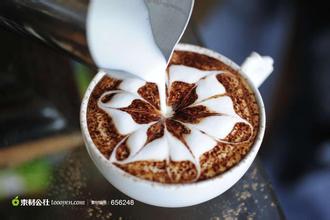
Introduction to the characteristic boutique coffee in Dominica coffee flavor manor with smooth taste
In the early 17th century, when French, Dutch, and British pirates were operating in the western part of Hispaniola, France began to allow farmers and merchants to gradually colonize the western part of the Spanish island, blocked by the island's mountains. Without attracting the attention of the Spaniards in the east, L'Or é al arrived in Santo Domingo in 1801. He abolished slavery on behalf of the French government. In 1802, Napoleon sent

Introduction to the characteristics of Dominica Santo Domingo coffee flavor varieties with light aroma
In 1677, about 4,000 French lived in 11 villages in the west of the island. In 1697, France and Spain ceded the western part of the island to France according to the Leswick Treaty of the Alliance War, formally recognizing French sovereignty over Haiti in the western part of the Spanish island, and the eastern part of the Spanish island was called East Santo Domingo. France continues to develop its agricultural economy on the island of Hispaniola.
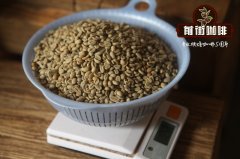
Sino-American Coffee | Cuban Coffee producing areas introduce the special flavor of traditional Cuban coffee
Cuba has grown coffee for more than two centuries, including high-quality Arabica coffee varieties. Cuban coffee is usually strong espresso. Traditional Cuban coffee is dark roasted, finely ground coffee, using an espresso machine or mocha pot to make espresso. An important coffee growing area in Cuba is located in Selama Estra in eastern Cuba.

How to tell the roasting degree of coffee? What are the common degrees of baking? each comes out.
Professional coffee knowledge exchange more coffee bean information please follow the coffee workshop (Wechat official account cafe_style) Qianjie coffee to share coffee roasting degree. How to tell the roasting degree of coffee? American Coffee Association (SCAA) roasting degree standard this standard uses infrared caramelization tester technology (Agtron) to measure the color of coffee beans to determine the roasting degree of coffee, and

Introduction to the planting environment in the manor area of Dominica coffee flavor
Trujillo, on the other hand, used extreme methods such as murder, abuse and intimidation to suppress opposition to the government. To show his arrogance, Trujillo awarded himself the Grand Marshal to rename the capital Santo Domingo to Trujillo, and he changed Mount Duat, the highest mountain in the Caribbean, to Trujillo. And name many large and small cities and towns in the country after themselves.

How are coffee beans graded? are coffee beans graded by size?
Professional coffee knowledge exchange more coffee bean information Please pay attention to the coffee workshop (Wechat official account cafe_style) in the coffee production process, there is a step is to grade coffee raw beans, divided into different grades of coffee raw beans, to facilitate export, quality control and raw bean price. The better the coffee, the higher the grade of raw beans. Each country has its own grading system.

Introduction of Dominica boutique coffee with full grains and excellent acidity
In 1677, about 4,000 French lived in 11 villages in the west of the island. In 1697, France and Spain ceded the western part of the island to France according to the Leswick Treaty of the Alliance War, formally recognizing French sovereignty over Haiti in the western part of the Spanish island, and the eastern part of the Spanish island was called East Santo Domingo. France continues to develop its agricultural economy on the island of Hispaniola.

Introduction to the characteristics of Dominican Coffee Flavor and Taste Manor
In December 1492, Christopher Columbus arrived on Hispaniola on his first voyage. On his second voyage there in 1493, Santo Domingo became the capital of the island. [3] thousands of Tainos were demoted to slavery and engaged in gold mining. Due to a series of oppression, hunger and disease, by 1535, the Tino had only 60,000 left. 1501, Spain

Introduction to the characteristics of Dominica Coffee Flavor and taste Manor
In 1677, about 4,000 French lived in 11 villages in the west of the island. In 1697, France and Spain ceded the western part of the island to France according to the Leswick Treaty of the Alliance War, formally recognizing French sovereignty over Haiti in the western part of the Spanish island, and the eastern part of the Spanish island was called East Santo Domingo. France continues to develop its agricultural economy on the island of Hispaniola.

Full-grained Dominican Coffee Flavor and Taste introduction to boutique coffee beans in manor area
In 1677, about 4,000 French lived in 11 villages in the west of the island. In 1697, France and Spain ceded the western part of the island to France according to the Leswick Treaty of the Alliance War, formally recognizing French sovereignty over Haiti in the western part of the Spanish island, and the eastern part of the Spanish island was called East Santo Domingo. France continues to develop its agricultural economy on the island of Hispaniola.
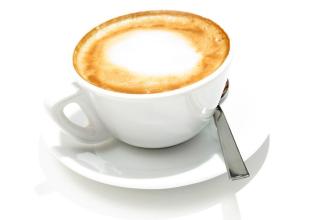
Introduction to the flavor and taste of high-quality coffee beans in Dominica Coffee Manor
After the return of Santo Domingo to Spanish rule during the Haitian occupation (1821-1844), the local people gradually formed a consensus on independent statehood. On November 30th, 1821, the former Governor of Santo Domingo, General Jos Nez de Cceres, proclaimed the founding of the country, named Haiti, Spain, and expected to merge under the Greater Colombian State led by President Bolivar of South America. [3] but

Santo Domingo coffee planting information distribution flavor description graded manor description
For professional baristas, please follow the coffee workshop (Wechat official account cafe_style) Dominica's delicious sweet, full-grained coffee the Dominican Republic (Dominican Republic) is next to Haiti, both of which own the island of Hispaniola (Hispaniola). Like its neighbors, the Dominican Republic had a history of revolution and poverty, but now it has

Introduction to Dominica Santo Domingo Coffee Manor with excellent acidity and pleasant fragrance
In December 1492, Christopher Columbus arrived on Hispaniola on his first voyage. On his second voyage there in 1493, Santo Domingo became the capital of the island. [3] thousands of Tainos were demoted to slavery and engaged in gold mining. Due to a series of oppression, hunger and disease, by 1535, the Tino had only 60,000 left. 1501, Spain
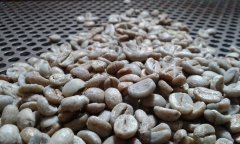
COB: a complex evolutionary history of the official grading system for raw coffee beans in Brazil
For more information on coffee beans, please follow the Coffee Workshop (Wechat official account cafe_style) cob: the complex history of the official classification system in Brazil the origin of cob sensory analysis has provided an important mechanism for pricing goods around the world since the beginning of trade. Color, smell and taste are one of many attributes used to grade a wide range of food and agricultural products.

An introduction to the characteristics of the fresh, elegant and full-grained coffee flavor manor in Santo Domingo, Dominica.
At the beginning of the 17th century, when French, Dutch and British pirates were operating in the west of Hispaniola, France began to allow farmers and merchants to gradually colonize the western part of the Spanish island, which was blocked by mountains on the island. It didn't attract the attention of the Spaniards in the east. [3] in 1677, about 4,000 French lived in 11 villages in the west of the island. In 1697, France and